What Types of CMM Structures Are There? Bridge, Gantry, Cantilever, and Horizontal Arm—How to Choose?
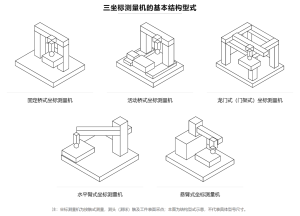
They are all called “CMMs,” yet one looks like a bridge, another like a doorway, and another reaches out like an arm. Different structures mean different workpieces they can measure, different floor space they occupy, and different price tags. In this article we walk through the common structures in a single diagram and a few short paragraphs.
I. Bridge CMM
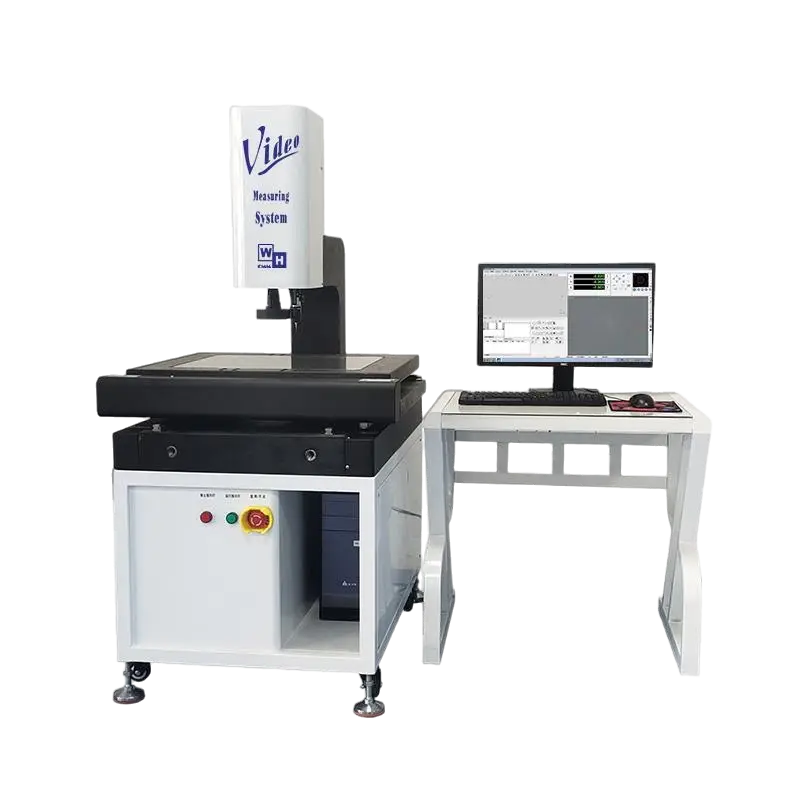
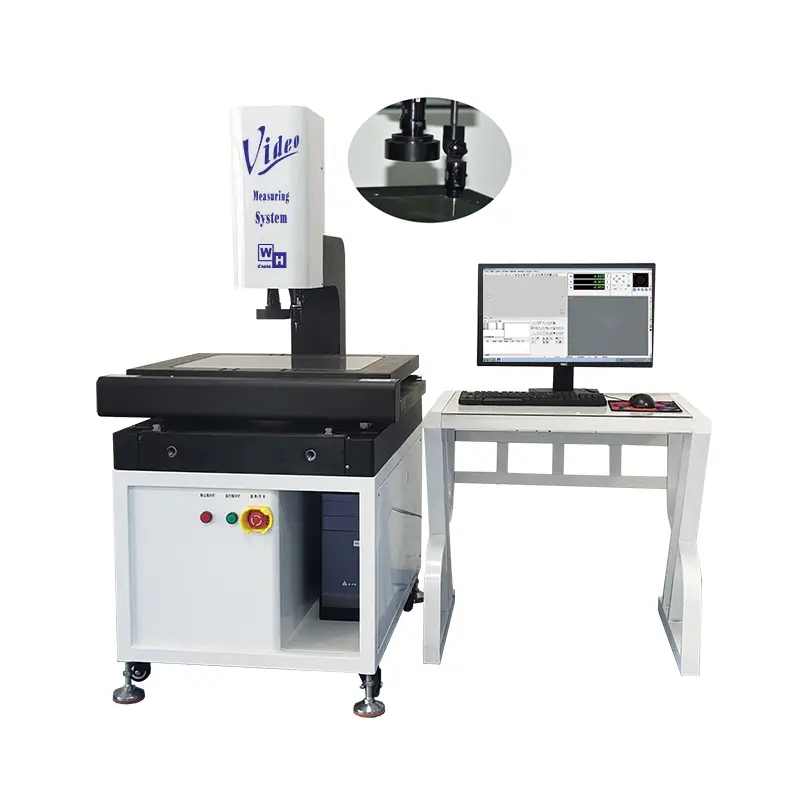
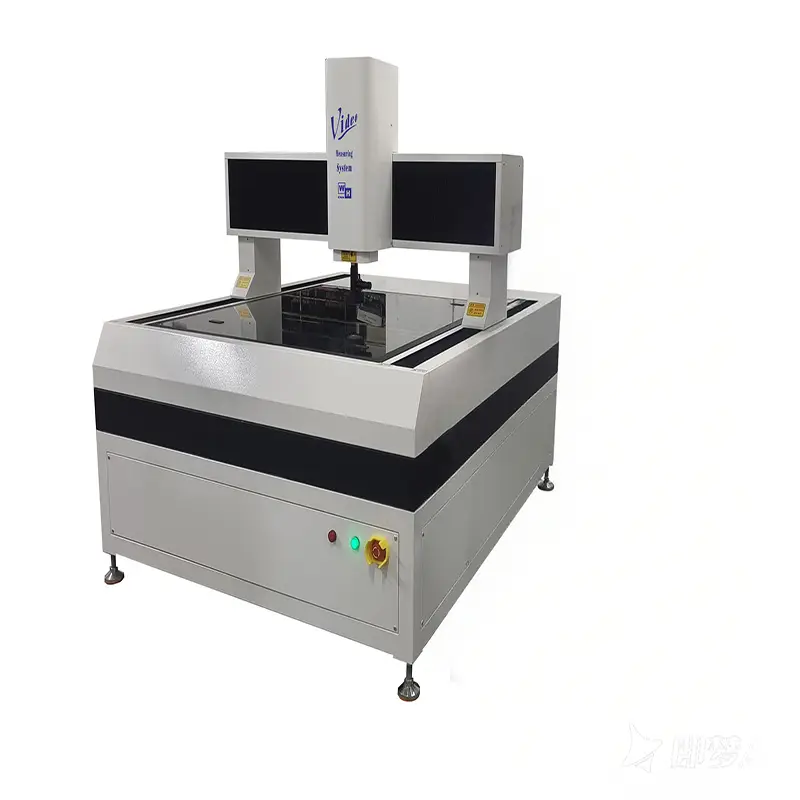
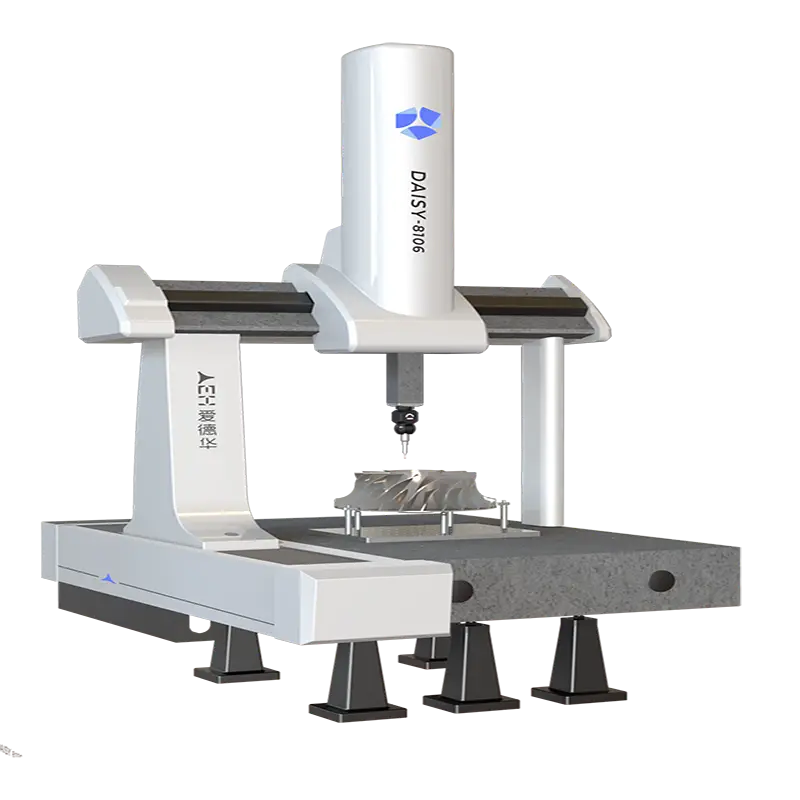
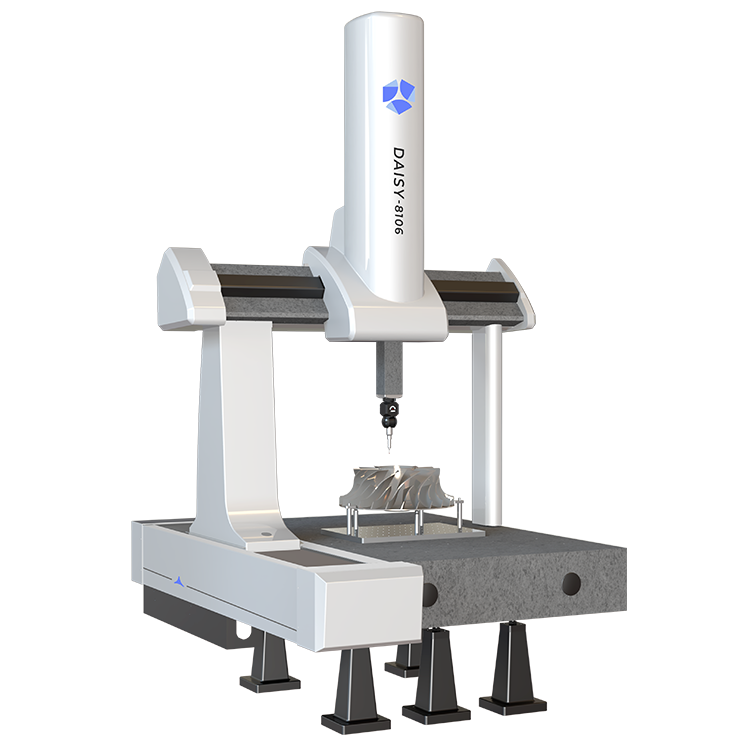
The bridge CMM is one of the most widely used and most common CMM structures: two columns and a crossbeam form a “bridge,” the probe travels along the bridge, and the workpiece sits on the table beneath it. It comes in two variants:
Fixed-bridge: the bridge stays still while the table moves to carry the workpiece. It offers high structural rigidity and stable accuracy, making it ideal for high-precision inspection—but workpiece size is limited by the table, and loading/unloading is slightly more troublesome.
Moving-bridge: the bridge itself travels along the guideways while the workpiece stays put. It is easy to load and unload, highly efficient, and a mainstay of mass-production inspection lines; both speed and travel are built relatively large.
Best for: dimensional and geometric-tolerance inspection of most machined parts, covering everything from gearboxes to housings.
II. Gantry CMM
The gantry CMM looks like a doorway supported by four columns; the measuring system runs along the crossbeam while the workpiece passes beneath the frame.
Its advantages are straightforward: large travel and strong load capacity. For big, heavy workpieces such as wind-turbine blades, large molds, and aerospace structural components, you simply set them down and the machine measures around them.
The trade-offs are considerable, too: it takes up a lot of floor space, costs more, and has requirements for the foundation and environment. If your workshop is not well planned yet, don’t rush into a gantry machine.
Best for: large, heavy workpieces with high accuracy requirements.
III. Cantilever CMM
The cantilever CMM has just a single column, with the horizontal arm extending out from it like an outstretched arm. The workpiece is open on three sides, making loading, unloading, and hoisting convenient, and allowing the operator to work right up close to the part.
However, the longer the overhanging arm, the more rigidity suffers, so cantilever travel is generally kept modest, with accuracy positioned in the mid-to-high range.
Best for: medium-sized workpieces and scenarios that require frequent loading/unloading or integration with a production line—for example, automotive body-in-white and sheet-metal part inspection.
IV. Horizontal-Arm CMM
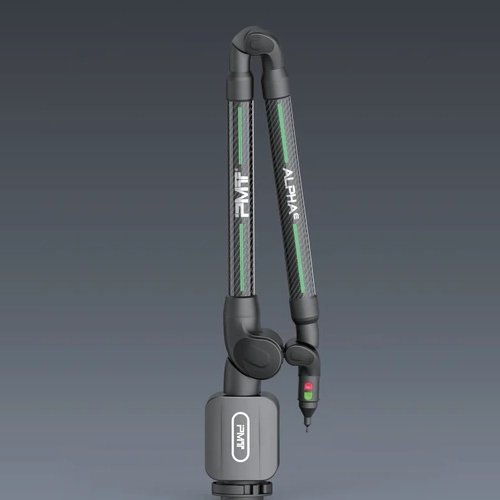
The horizontal-arm CMM has an arm extending horizontally, and it is especially good at measuring horizontal dimensions on the sides of a workpiece—for example, the flushness and hole positions of large thin-sheet parts such as car doors and hoods.
It is often paired with racks or rotary tables to form an inline inspection station. Its accuracy does not reach the extreme of a bridge type, but it is very practical for thin-sheet workpieces.
Best for: horizontal measurement of automotive panels, sheet metal, and thin-walled parts.
V.So How Do You Actually Choose?
1.Look at the workpiece: for small and medium parts, start with a bridge CMM; for large, heavy parts, go gantry; if you load and unload frequently, consider a cantilever CMM; for side dimensions on thin sheets, look at a horizontal-arm CMM.
2.Look at accuracy: the bridge CMM offers more stable accuracy, while gantry, cantilever, and horizontal-arm CMM strike a balance within their own applications.
3.Look at the site: the foundation, the available space, and how smoothly loading/unloading works are often what truly determine which structure to buy.
VI.About Weihong Precision
Dongguan Weihong Precision Instrument Co., Ltd. specializes in precision measuring equipment, offering 2D/2.5D optical measuring machines, coordinate measuring machines, and automated measurement solutions. Its lineup covers mainstream structures including the bridge type, and it supports selection consulting and localized service. Its technical team traces its origins to a company in Taiwan, China, and it brings over thirty years of deep expertise in 2D/3D dimensional inspection.
No structure is inherently better or worse—only more or less suitable. Choosing the right structure delivers more stable quality than spending more money does.
VII. Closing
Are the parts you inspect on the large or small side, and do you load and unload them frequently? Feel free to share your scenario in the comments. If you are unsure which structure to choose, you can also message us and we will advise you based on your workpiece. If you found this useful, give it a “Wow” or forward it to your colleagues in purchasing and quality.