What Role Do Fixtures Play in a Coordinate Measuring Machine?
When buying a CMM, most people look only at the machine itself: how much travel, what accuracy, which probe. It is only after the equipment arrives on the shop floor that they discover one more thing they failed to factor in—the fixture. How a workpiece is secured, and how fast it can be loaded and unloaded, affects your measurements every single day.
I.A Fixture Does Two Things: Locate the Part and Hold It
First, locating: so that every time the workpiece is placed, it lands in the same position and the same orientation. Second, clamping: so that during measurement the workpiece cannot be pushed out of position by the probe or slide across the table.
It sounds simple, but CMM accuracy is at the micron level—shift the workpiece by a few microns and the geometric tolerance you measure changes. If the fixture isn’t solid, no amount of accuracy in the calculations downstream will save you.
II.Without a Fixture, Where Does It Go Wrong?
The common practice on the shop floor is to tack a part down with modeling clay, double-sided tape, or a magnet, or simply hold it by hand. It produces numbers in the short term, but the problems surface later.
The workpiece sits in a different position every time, so alignment eats up a lot of time. With no consistency in who places the part or how, there is no basis for comparing one set of data with another. For thin or overhanging parts, a nudge from the probe mid-measurement shifts the part and the whole run has to be redone. More important, when a part is only half-heartedly clamped, you cannot tell whether the deviation you measure belongs to the part itself or to the insecure hold.
III. Fixtures Directly Affect Measurement Accuracy
The locating datum must match the design datum on the drawing and the measurement datum.
Take an example. The drawing asks you to measure parallelism using face A as the datum, but you casually rest a side face against the fixture when clamping—and the result comes out wrong. The machine is not at fault; the datum has changed.
Then there are the locating points. Securing a rigid body correctly means constraining its six degrees of freedom; too many constraint points, or points in the wrong place, cause over-constraint that distorts the workpiece. Thin-walled and plastic parts are especially sensitive—apply too much clamping force and the part deforms, so the measured dimension comes out smaller than the true one. Such parts often do away with clamping force altogether in favour of vacuum suction or light pressure.
IV.Fixtures Affect Efficiency, Too
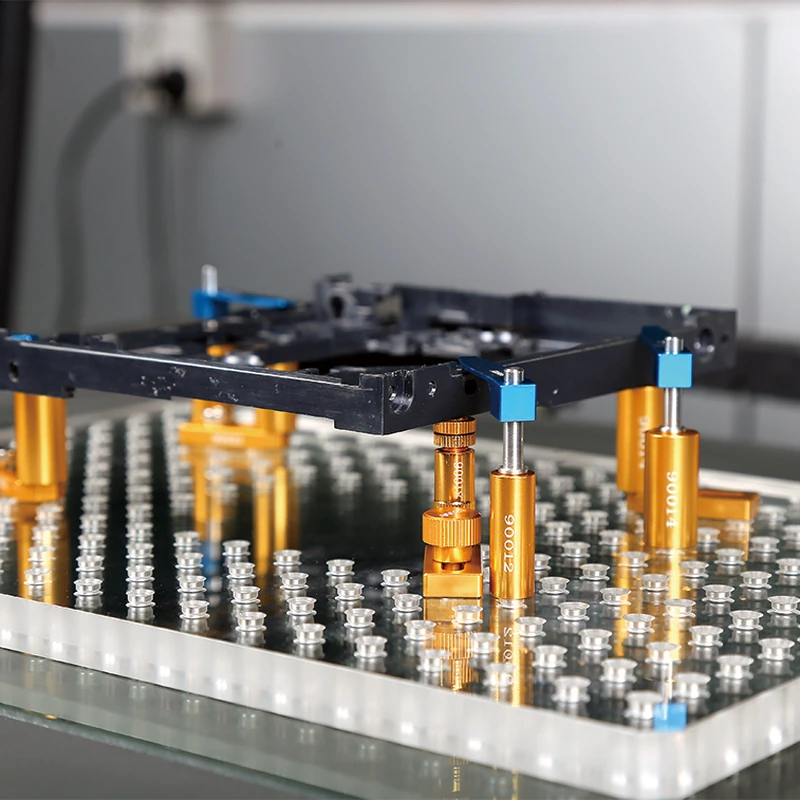
With a dedicated fixture, you drop the part in, push it home, and the position is correct—the program can run straight away. Without one, every part needs manual re-alignment, which takes longer than the measurement itself. Measure a few dozen parts a day and it adds up to a full person’s workload.
Consistent data across a batch of parts depends on clamping the same way every time. A fixture is exactly what locks down “how the person places the part.”
V.Different Parts Call for Different Fixture Approaches
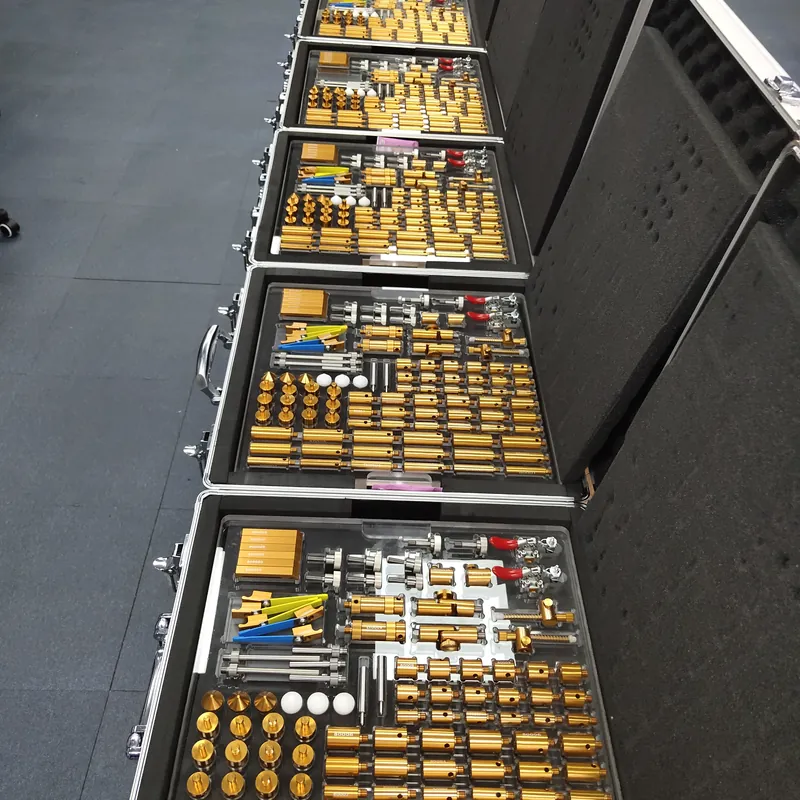
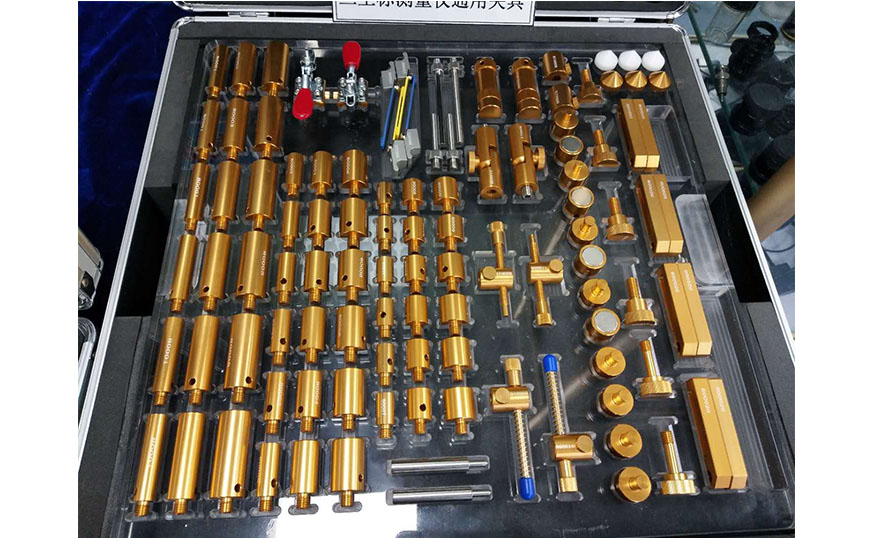
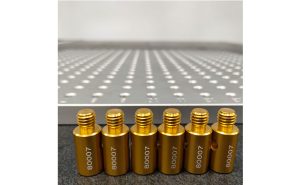
For square, regular parts, a machine vise, clamps, or step blocks will do—the key is not to distort the workpiece when clamping.
For thin-walled and easily deformed parts, prefer vacuum chucks, soft jaws, or point-contact supports, and reduce clamping force to just what is needed.
For cylindrical and shaft-type parts, use V-blocks or a three-jaw indexing head—they both locate the part and make it easy to rotate for measuring in multiple directions.
For irregular and curved-surface parts, you need a dedicated fixture made to the shape of the workpiece, or adjustable supports combined with adhesive fixturing. These non-standard requirements usually need to be discussed with the manufacturer at the machine-selection stage.
Choosing a Fixture: Points to Watch
Material: use a softer material—copper, aluminium, or a soft pad—wherever it contacts the workpiece, to avoid leaving marks on the surface.
Structure: keep clear of the probe’s travel path wherever possible, so the fixture does not block the features that need measuring; the fixture itself must also be rigid enough not to wobble at a touch from the probe.
Clamping method: quick part changeover saves effort, and in batch work the payoff is immediate.
Ultimately, whether a fixture works well becomes clear the moment you actually clamp a few typical, above-average-difficulty workpieces from your shop. Measure once to see whether the numbers hold steady, then measure repeatedly to check repeatability—far more useful than staring at drawings and thinking it over.